
Hotels and Beer Parlours
Tales served with ales
Wander down Dunsmuir Avenue and swing open the doors to hear tales from the rebellious, the righteous, and the radical.
Where will you choose to stop first, and who will you rub shoulders with today?
Map Locations

Address: 2723 Dunsmuir Avenue, Cumberland, BC, V0R 1S0
Date of Construction: 1909
Original Owners: Vittorio "Victor" Bonora, later with Carlotta Bonora
There was a howl, a growl, and a grunt Thursday night when an intoxicated individual came out head first from the bar room of the King George Hotel and landed on the pavement. [He] was evidently anxious to fight Victor Bonora, the proprietor of the hotel."
Islander, Oct 26 1912
Renowned as a successful wrestler and weightlifter, Vittorio "Victor" Bonora quickly came to be one of Cumberland’s premier businessmen. Originally from Trentino, Italy, he arrived in Cumberland in 1893 to work as a coal miner. In 1909, he left the mines to build the two-storey “Bonora Block” on Dunsmuir Avenue.
The Bonora Block was home to a variety of stores, restaurants, and offices, and in December of 1911 after obtaining a retail liquor licence and completing renovations on the building, Bonora transformed the block into the King George Hotel.
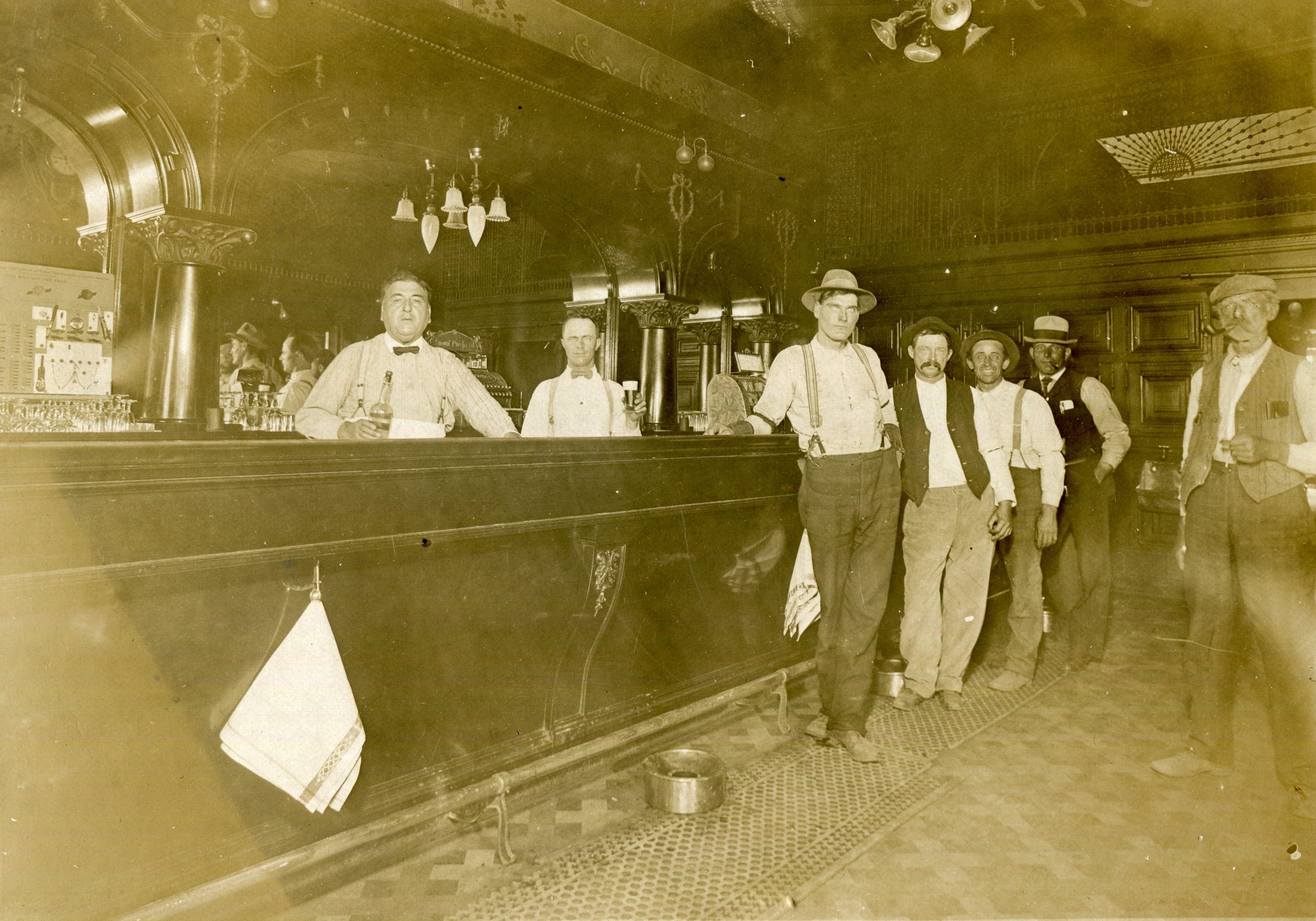
Bonora’s “new and modern” hotel promised to be “first class in every respect”. The hotel had 50 rooms, “heated throughout with hot air and having hot and cold water.” (Islander, Oct 28 1911).
Barflies flocked to the King George bar, and Bonora, with his weightlifter’s build and background in wrestling, was quick to quell any scuffles brewing between patrons. It would take provincial regulation to see the hotel's doors closed – which they did, temporarily, in 1918.
In October 1918, to combat the rapidly-spreading Spanish Influenza, the province passed an Order-in-Council closing all public gathering spaces in most B.C. municipalities. Hotels and parlours in Cumberland shuttered. The King George didn’t sit empty, however – it was appropriated as a temporary hospital and quarantine area. The King George served as a hospital until the end of October, when its seven patients were transferred to an emergency hospital set up in the local public school.
When the flu epidemic hit Cumberland I got it and they had to open up the schools for hospitals. I was up there in the bed and they were dying around me like flies.”
Bowen, Lynne. Boss Whistle. 1982, pp. 211.
Approximately one in three British Columbians caught the Spanish Flu at some point during the epidemic. The flu disproportionately infected young, athletic adults between the ages of 20 and 40 – the kind of people who worked in Cumberland's coal mines. Employees of the Collieries offices and machine shops wore masks to prevent the spread of disease, but with as much as 75 percent of Cumberland's miners absent from the mines, production dipped to about 25 percent of its pre-epidemic level.
Luckily, the quarantines helped to contain the disease. On the first week of December, after upwards of 300 deaths on Vancouver Island, a second Order-in-Council reopened public spaces in Cumberland.
After the epidemic subsided, Bonora briefly travelled back to Italy, where he met and married Carlotta in 1921. The pair returned to Cumberland and to the King George, which they co-owned until Victor’s death in 1932.
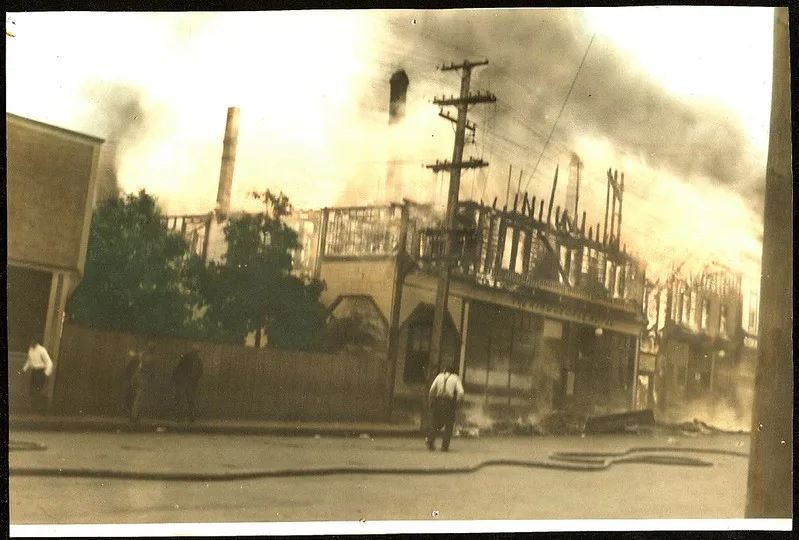
Around noon on July 13 of 1933, a fire started in the hotel’s top floor. Some 150 people – Cumberland and Courtenay Volunteer firemen alongside private citizens – fought the blaze, but standard firefighting techniques proved insufficient. In the dry summer heat, the King George burned to the ground.
Fanned by a strong southeastern wind, the flames consumed the tightly-packed wooden buildings of Dunsmuir Avenue, jumping the street to spread both east and west. Having exhausted all other options, the Cumberland Volunteer Fire Department detonated 40 sticks of dynamite in the burning Royal Bank across the street from the hotel, finally containing the fire.
The 1933 fire burned for just over three hours. It was the most destructive in the village’s history, razing 10 houses and 18 commercial buildings – half of Cumberland’s commercial district.
Miraculously, nobody was seriously injured, and locals hunting for work during the Depression began reconstruction. The hotel, like most other buildings in the area, was mostly rebuilt within six months. The now two-storey King George Hotel had nine top-floor rooms to let, offices, a kitchen, a dining room, and two beer parlours.

Address: 2692 Dunsmuir Avenue, Cumberland, BC, V0R 1S0
Date of Construction: July 1894
Original Owners: Various lease holders before 1909 purchase by Frank and Domenica Dallos
The second hotel to be built within Cumberland city limits, the Waverley Hotel, opened in 1894 as a temperance house. Alternately known as the Waverly House, Waverly Hotel, or the Waverley, it is Cumberland’s oldest continuously operating hotel.
After the hotel obtained a liquor licence in 1896, Cumberland’s miners frequented (and frequently brawled in) the in-house bar, affectionately nicknamed the “Hug ‘n Slug”. With room and board at a dollar and half per day for short-term residency and special monthly and annual rates, the Waverley was “liberally patronised” by local miners and tradesmen (Cumberland News, Jan 31 1912).
Many miners likely felt betrayed, then, when the Waverley began housing police during the “Big Strike.” In September of 1912, strikes erupted across Vancouver Island as coal miners protested unsafe working conditions and abysmal pay. In response, the province posted provincial special police in Cumberland, lodging them in the Waverley.
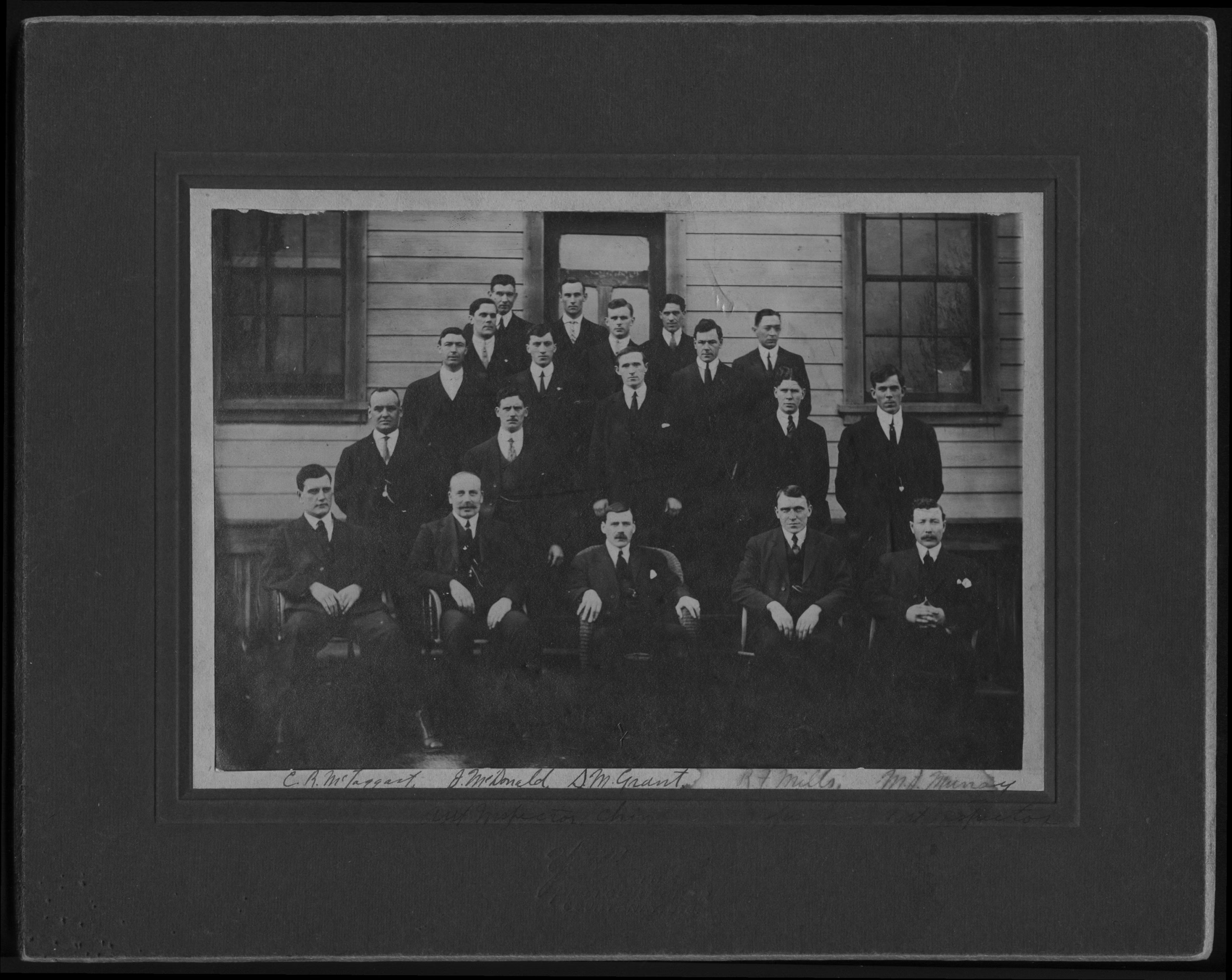
To stifle protests and guarantee the continued operation of the Collieries, the “specials” isolated striking Chinese and Japanese miners from the rest of Cumberland. After barricading the entrances to the Chinese and Japanese townsites, the specials threatened deportation if the Chinese and Japanese miners continued to strike, forcing them to sign exploitative contracts and return to work as strikebreakers.
One of these special policemen would come along, you might be walking on the sidewalk and he’d bump you off, stagger into you. You’d retaliate and you were pinched off for assaulting a police officer.”
Bowen, Lynne. Boss Whistle. 1982, pp. 148.
While the specials were ostensibly sent to keep the streets peaceful and protect strikebreakers, their presence incited repeated riots on Dunsmuir Avenue, right outside the Waverley. The government leased the rooms at three times the standard rate, so the Waverley profited when many other local businesses were struggling.
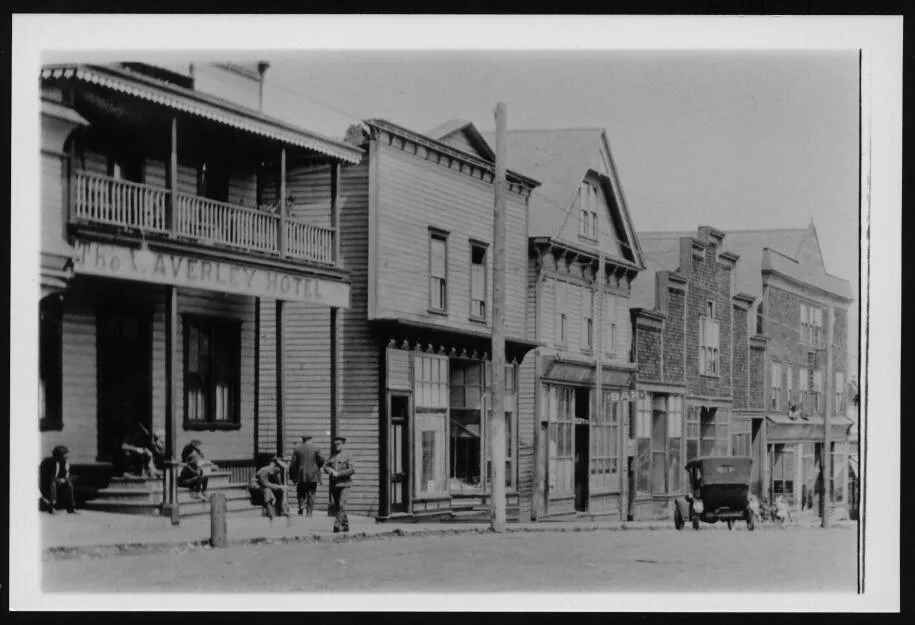
On April 19, 1967, the Waverley was set ablaze. All of the ten lodgers on the top floor escaped unharmed, and the hotel remained standing, but the damage to the building was severe. The top floor was beyond saving and had to be removed.
Rumours of arson abounded, with one police officer investigating the fire having “no doubt the fire was deliberately set,” as “an inflammable fluid was used” to set fire to the front and back of the hotel (Nanaimo Daily News, Apr 21 1967).
The investigation revealed the dangers of the hotel business, as police soon arrested Leonard Robert Wilson, co-owner of the nearby King George Hotel. Police alleged that Wilson recruited two local men to set the fire and flee the scene. On May 16th, Wilson was charged with two counts of inciting others to commit arson, though he was apparently never convicted.
Owners Claude and Hazel Jordan renovated the Waverley after the fire, stuccoing the exterior and moving the main entrance. With renovations and changes in B.C. liquor law, the Waverley Hotel transformed from a beer parlour into a popular pub and venue for live music and entertainment in Cumberland.
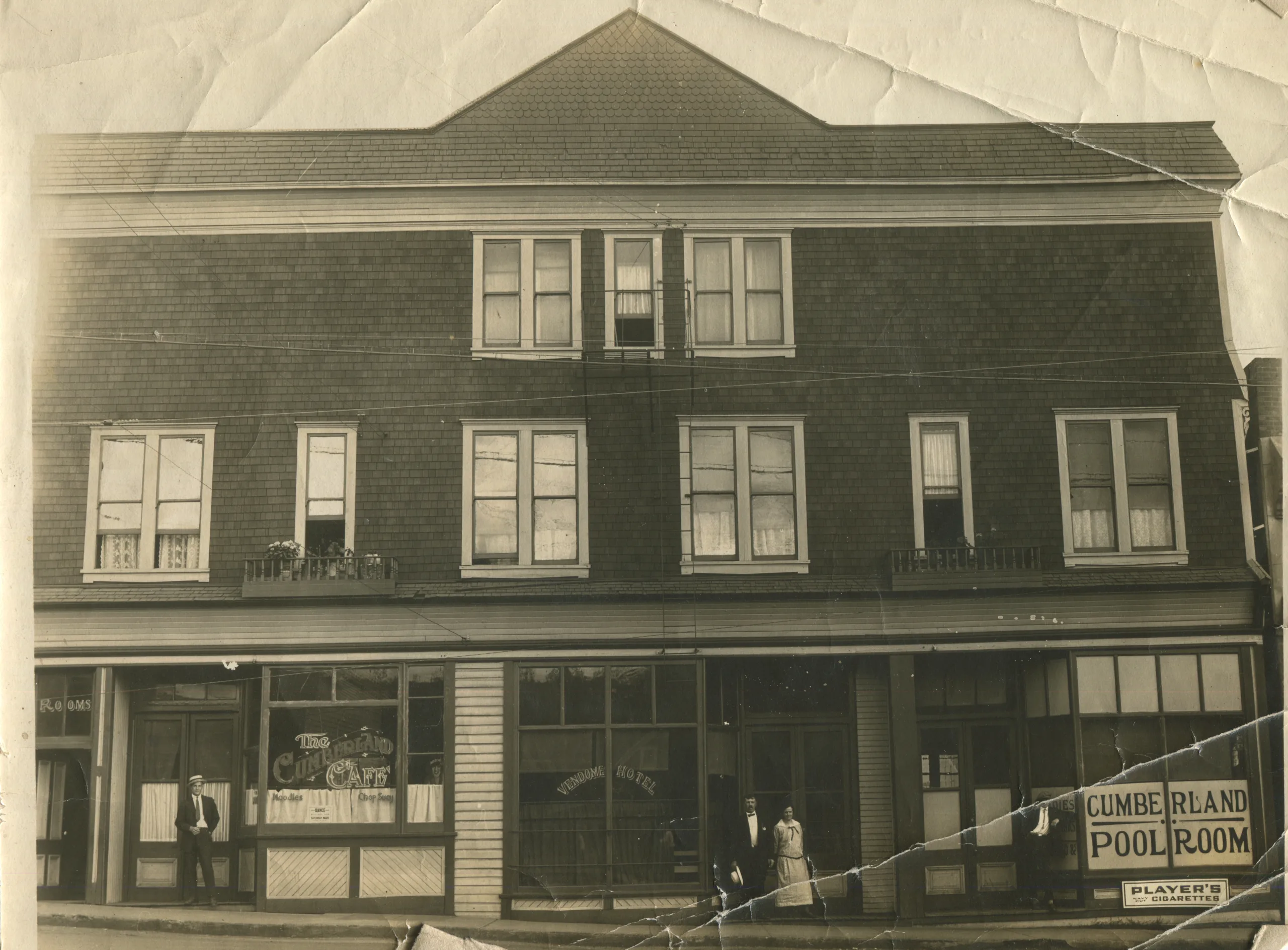
Address: 2704 Dunsmuir Avenue, Cumberland, BC, V0R 1S0
Date of Construction: 1895
Original Owners: John and Sarah Jane Williams
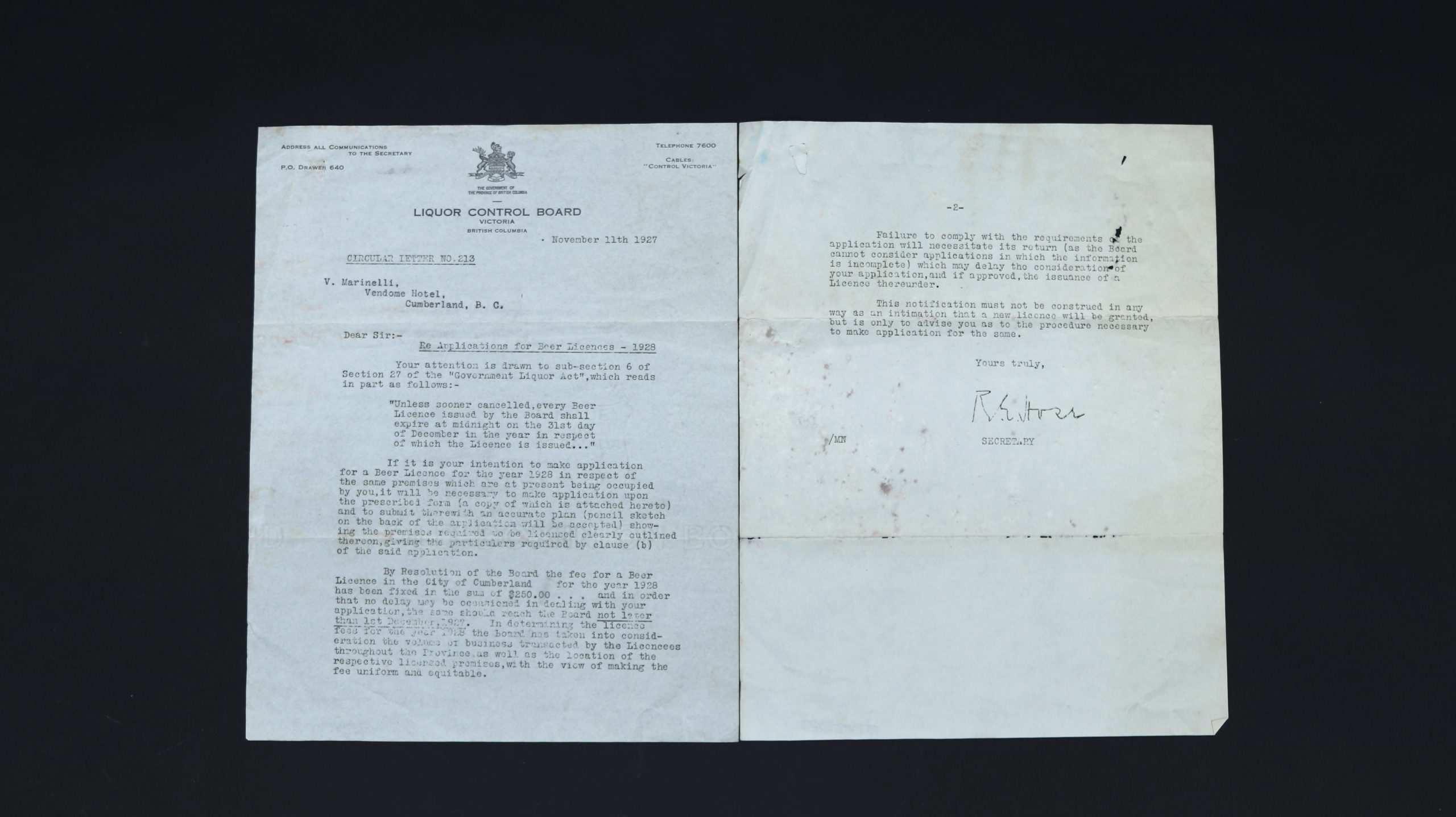
Originally a restaurant and boarding house run by Mr. and Mrs. W.J. Harrigan, the three-storey Vendome Hotel changed hands a number of times before its 1924 purchase by Virginio Marinelli. Marinelli, a former coal miner who emigrated from Austria in 1894, was already an established businessman in Cumberland. He and his wife Maria “Mary” ran a local boarding house, a fruitery, and a pool hall – which Marinelli moved into the Vendome. The Marinellis were well-connected in town, but the Vendome came to be best known for its attached saloon, dubbed the “Bucket of Blood” for its violent brawls.

When Virginio first settled in Canada, British Columbia was still the country’s “Wild West”: unregulated saloons often stayed open 24 hours a day, seven days a week. A 1913 amendment to the Liquor Licence Act banned the freestanding saloon – bars could only operate if attached to a hotel, so proprietors who invested in their liquor service could draw in large crowds of thirsty customers.
By the time the Marinellis bought the Vendome, British Columbia’s brief prohibition had already wrapped up: enacted in 1917, it was formally repealed by referendum in 1920.
The end of prohibition didn’t mean the end of trouble for Cumberland’s bars, however – under the 1921 Government Liquor Act, hotels still couldn’t serve alcohol. The Act prohibited businesses from advertising as “bars” or “taverns”, and outlawed the consumption of liquor in “any part of an inn other than a private guest room”. (Government Liquor Act, 45, 43.1).
A 1925 revision of the Liquor Act introduced the post-prohibition answer to the hotel saloon: the beer parlour. The strictly-regulated beer parlour had no music, no dancing, no games, no liquor stronger than beer, no food, no soft drinks, and, implicitly, no women. These policies encouraged patrons to stop in, have a quiet drink while seated, and leave (or, better yet, not show up in the first place).
Legally-minded hotel proprietors struggled to obtain the required licences and navigate the restrictive new regulations – but enforcement of the Liquor Act was difficult, and business owners willing to bend the rules could make a tidy profit. Between 1923 and 1929, Virginio was arrested at least five times for liquor-related infractions at the Vendome, and Mary was arrested at least once. Their run-ins with the law apparently didn’t discourage them, and Virginio maintained ownership of the Vendome until his death on Christmas Day of 1930.
The Vendome's commercial rental spaces on the ground floor were continually leased by various local shops and businesses. Over the years, the hotel housed a grocer, a toggery, and several cafes. The Campbell Brothers temporarily moved their dry goods store into the building after their previous storefront burned down in the July 1933 fire.
In April of 1936, the Vendome caught fire and was mostly destroyed. Mary Marinelli and her son Victor, who had together managed the hotel after Virginio’s death, hired contractors to rebuild the first storey. The workers salvaged what wood they could from the fire and topped the building with a cornice similar to that of the original hotel. The new building, with the hotel’s original wooden flooring and some original beams, is still standing and has hosted a variety of local businesses, but the hotel never reopened. After successfully weathering prohibition and years of legal battles, the 1936 fire marked the end of the Vendome Hotel and the Bucket of Blood.
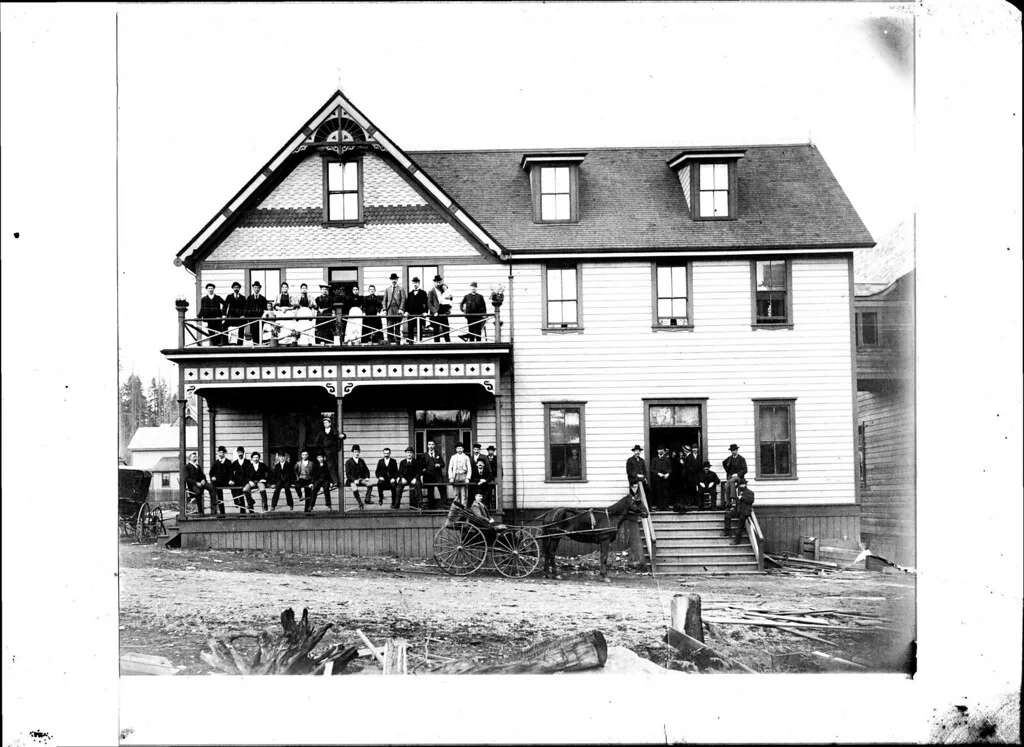
Address: 2714 Dunsmuir Avenue, Cumberland, BC, V0R 1S0
Date of Construction: 1893
Original Owners: John “Jack” Bruce and George Grant MacDonald
The first hotel to be built in the village of Cumberland, the aptly-named “Cumberland Hotel”, opened on New Year’s Day of 1894. Transient workers were flocking to Cumberland in search of employment and housing, and the hotel had the potential to be an incredibly profitable business.
Initially built with an upper floor of lodgings and a main hall on the ground floor, within the month Jack Bruce and George G. MacDonald were constructing additional rooms in the attic. Shortly after, they sold the hotel to Diana and John Piket.
The Pikets emigrated from Nottingham, England to Denman Island in 1882. After a brief stint on Denman, Diana moved to Cumberland (then known as Union), and established a boarding house. By 1891, it was the largest in Cumberland. While Diana catered to the lodgers – cooking, cleaning, and managing the boarding house – John farmed their land on Denman, supplying the house with meat, dairy, and fresh produce. Recognizing the opportunity provided by the influx of labourers in the area, John relocated to Cumberland and the Pikets purchased the Cumberland Hotel in spring 1894.
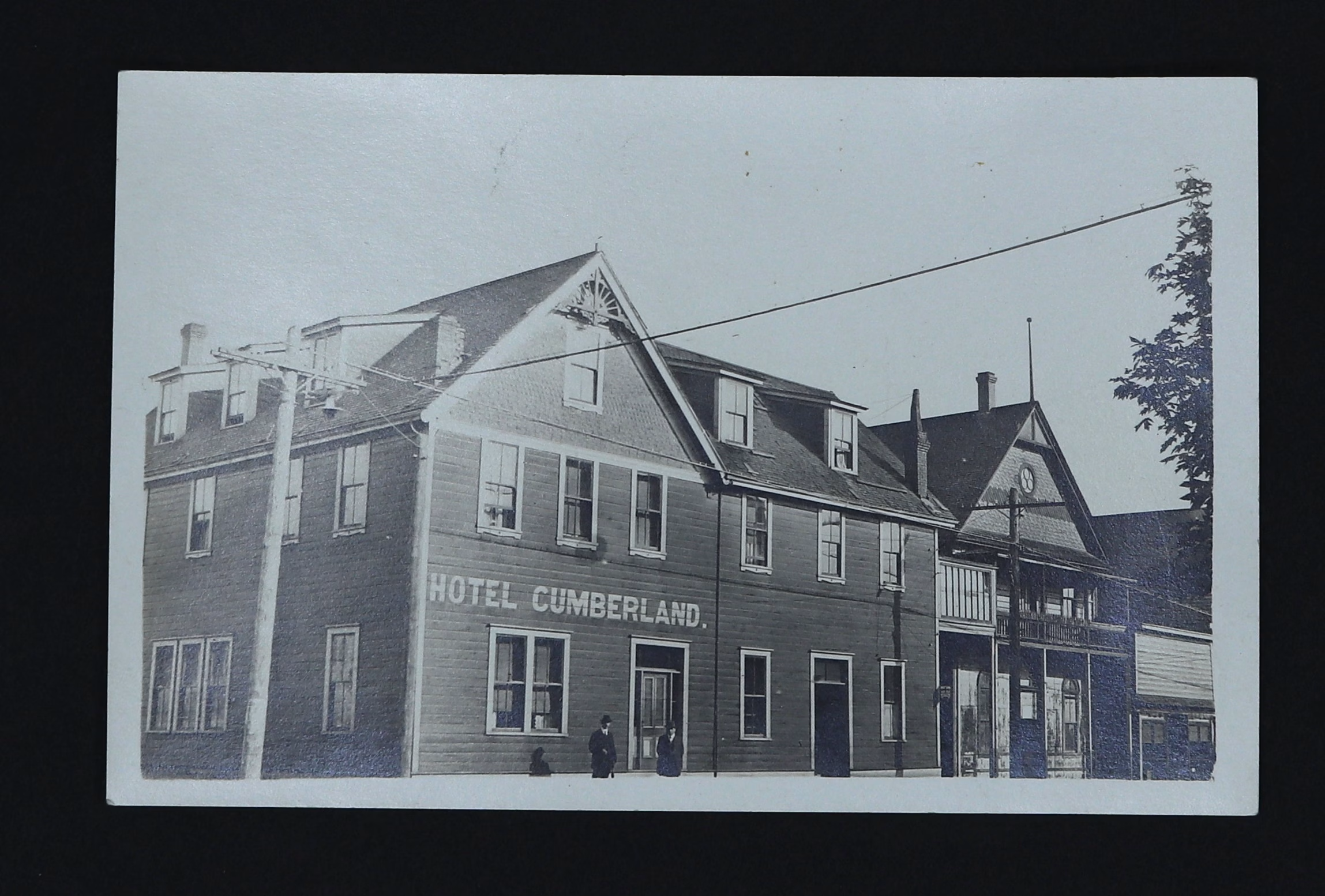
The couple’s reunification wasn't to last, however, as they separated in 1896. That same year, John assumed ownership of Courtenay hotel (and rumoured brothel) the “Spring Inn”, while Diana stayed on at the Cumberland.
Diana went into business with the hotel’s original co-owner, Jack Bruce. Diana remained proprietor while Jack managed the hotel bar. Diana became locally famous for her hosting and catering, with a neighbourhood newspaper boasting that “there is not a more popular hostess in the province.” (Cumberland News May 24 1899, quoted in Islander, Aug 5 1922).
Alongside the hotel, Diana founded and ran the nearby Cumberland Hall, which opened in summer 1894. In 1906 Diana was the first choice to host a luncheon for the visit of Governor General Earl Albert Grey and Lieutenant Governor (and Collieries owner) James Dunsmuir. The Governor General praised Diana’s excellence in hosting, as noted in local newspapers at the time.
Diana was also very involved in local charitable works. She volunteered for local community groups and churches, and, in the Cumberland Hall, hosted fundraising events for organizations like the Red Cross and the Cumberland General Hospital Women’s Auxiliary. At the same time, she cared for her and John’s five children.
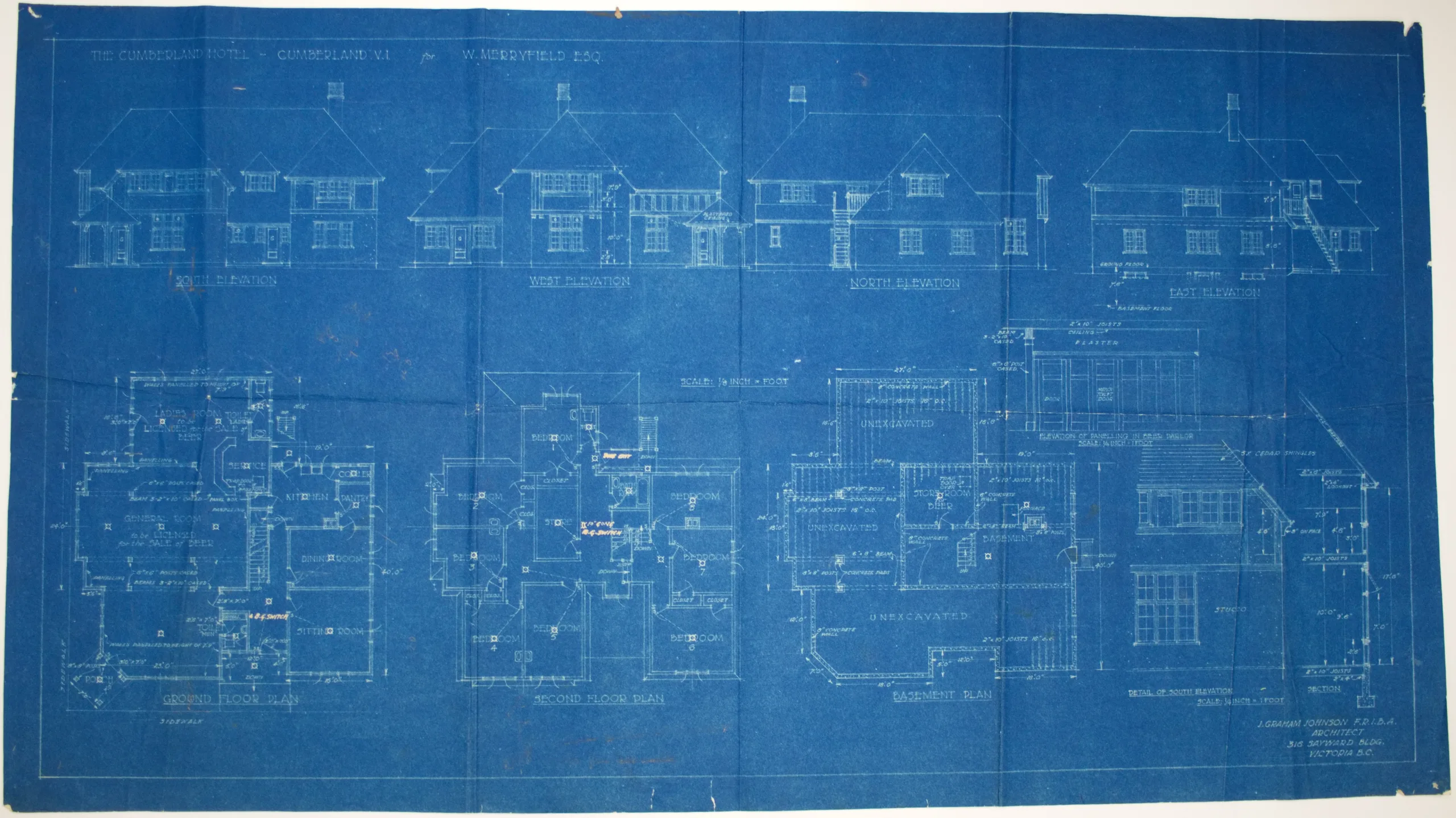
In 1909, Diana downsized, leasing the Cumberland Hotel to William Merrifield and opening a small boarding house. Though separated, Diana and John Piket never formally divorced – perhaps because, at the time, divorces in Canada were incredibly difficult to obtain. In 1896, the year of the Pikets’ separation, there were only three divorces in the whole of British Columbia.
In January 1914, John succumbed to pneumonia, leaving Diana a widow. She and Jack Bruce married in 1916. Diana passed away in 1934, and was laid to rest between John and Jack in the Cumberland Cemetery.
At the time of her death, the Cumberland Hotel was in the process of being rebuilt after being destroyed by fire in 1933. William Merrifield and his brother George, having purchased the hotel in 1912, added a number of upgraded amenities to the reconstructed building – its ten upstairs rooms had hot and cold running water and steam heating, and the main floor proffered a licensed beer parlour with B.C.-Liquor-approved separate entrances for men and women.
Although the hotel never again reached the province-wide acclaim of the Diana Piket ownership days, it continued to be a popular spot amongst locals until its closure in 2021.
Address: 2636 Dunsmuir Avenue, Cumberland, BC, V0R 1S0
Date of Construction: 1890
Original Owners: Union Colliery Company
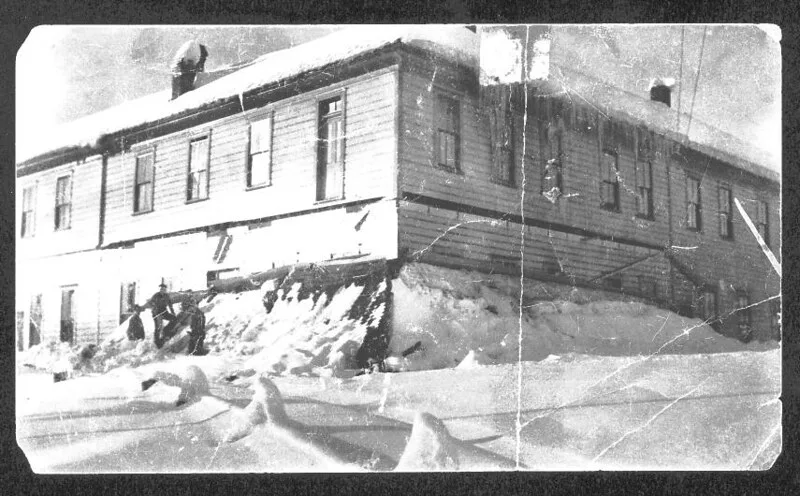
Before the establishment of the village of Cumberland, there was Union Camp. Union was founded in March of 1888, when mining magnate Robert Dunsmuir sent a small group of white miners and two hundred Chinese labourers to the Comox Valley. The miners had previously been employed at the successful Wellington Mines northwest of Nanaimo, and were sent to Union to open three coal seams and establish a camp in the area.
Leading the party was Samuel Clark Davis Sr., soon joined by wife Mercy Davis. The Davises had immigrated to Canada from the English city of Dudley, a coal town just outside Birmingham. On January 24 of 1888, Samuel had narrowly escaped with his life from an explosion in the No. 5 Pit of the Wellington Collieries. The explosion killed 77 men, including the Davises’ eldest son, 25-year-old Elisha.
With their surviving son, Samuel Jr., the family embraced life in the Comox Valley. After overseeing the initial development of the mine shafts, Samuel Sr. was tasked with the management of all non-mining work in the area, including the construction of living quarters.
Local workers cobbled together three old cabins to build a hostel for the new arrivals, and in September of 1890 Samuel Sr. and Mercy moved into and became the first managers of the Union Hotel.
Constructed just outside the city limits of what is now the village of Cumberland, the two-storey Union Hotel was the property of the Canadian Collieries (Dunsmuir) Ltd. The hotel had 15 bedrooms and an in-house bar, which was “supplied only with the best liquor and cigars.” (Cumberland News May 24 1899, quoted in Islander, Aug 5 1922). The initial lodgers of the Union were British men who worked in building- or bridge-construction.
The Union had some of Cumberland's first recreational social spots. After the work day, miners, labourers, and early white-collar workers headed to the Union Bar and billiards hall to grab drinks and play some friendly rounds of pool.
“I used to have my meals in the Union Hotel and I would eat with the travellers and the white-collar men. The miners would go to another room. But when we played cards, we played together.”
Dr. Giovando, Larry. Interview by Myrtle Bergen. Coal Tyee History Project, Vancouver Island University, 1979, p. 28.
Mercy died in 1909, and Samuel Sr. gave up his management position just before his death in October of 1912. A series of managers came and went after the Davises, including William “Bill” Jones, Cumberland mayor John Norman McLeod, and Mr. and Mrs. Robert Yates, previously of the Bevan Hotel.
In 1913, the Canadian Collieries (Dunsmuir) Ltd. began drafting renovations for the hotel, and by the time the Yates family assumed management in 1923, the hotel had 26 bedrooms, all with electric heating.
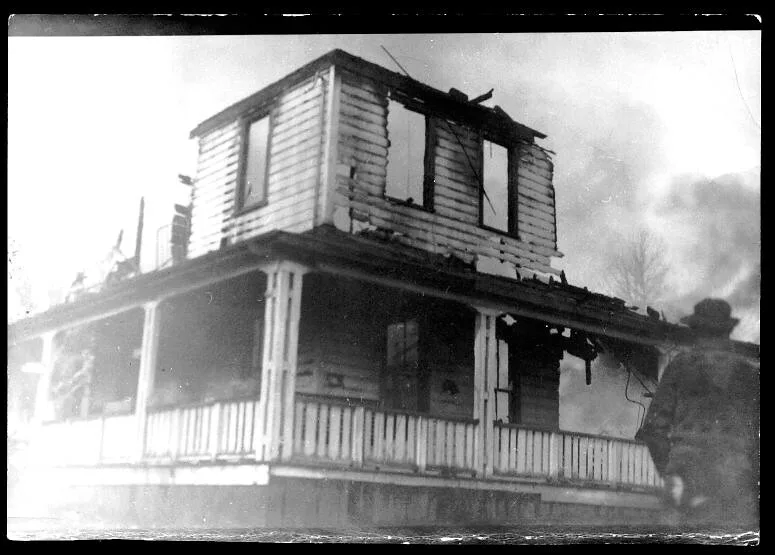
On February 8, 1953, the top floor of the Union Hotel caught fire. The twenty lodgers in residence at the time all escaped uninjured, fleeing down the front steps or scaling the hotel’s verandah. The hotel and several houses along Camp Road were completely destroyed in the fire.
Also in February of 1953, the Canadian Collieries ended operations at nearby No. 8 Mine. Coal mining was on the decline, and as the majority of the lodgers in the Union were miners, the Collieries elected not to rebuild the hotel.